

When people think of over exfoliating skin, they imagine dramatic flaking or redness. But in reality, some of the most common signs are subtle and easy to miss. In fact, your skin may look smooth or shiny, giving the illusion that everything is fine. But underneath, the barrier may already be under stress. So, understanding these early signs can help you protect your skin before irritation becomes a long-term issue.
What Over Exfoliating Skin Really Does
Exfoliation removes dead skin cells, which is helpful until it’s not. When it happens too often, it strips away the protective barrier that keeps moisture in and irritants out. Consequently, once this barrier weakens, skin becomes more reactive, dehydrated, and prone to inflammation. This is why over exfoliating skin often feels uncomfortable even when it looks smooth.
Subtle Signs of Over Exfoliating Skin
Over-exfoliation doesn’t always scream; sometimes it whispers. Your skin might be over-exfoliated if you notice:
- Tightness after cleansing that doesn’t improve with moisturizer.
- Products suddenly stinging or tingling for no clear reason.
- Makeup settling unevenly or emphasizing texture.
- A shiny surface paired with sensitivity underneath.
- Breakouts that feel sore, inflamed, or slow to heal.
If any of this sounds familiar, your skin may be asking for less stimulation and more support.
Why Is This So Common Today?
Modern skincare routines often combine multiple exfoliating elements without realizing it. For example:
- Acids (AHA, BHA)
- Enzyme masks
- Retinoids
- Cleansing tools
Individually, these steps may be gentle. However, together, they can overwhelm the skin. This is especially common for sensitive skin types or anyone focused on achieving fast results.
What to Do If You Suspect Over Exfoliating Skin
The most important step is to stop exfoliating completely. Then, shift your focus to recovery:
- Simplify your routine to the essentials (cleanse, moisturize, SPF).
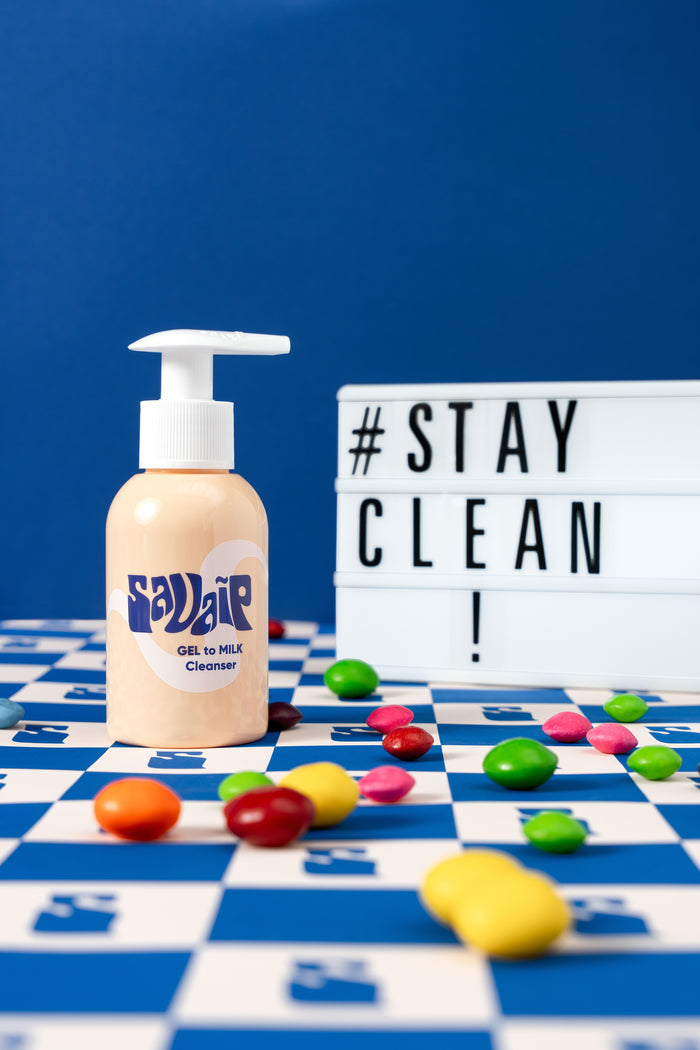
- Use a gentle, non-stripping cleanser, such as a gel-to-milk formula.
- Prioritize soothing, barrier-supporting ingredients like ceramides and oat extract.
- Avoid all actives until your skin feels calm again.
Ultimately, this isn’t a setback; it’s a reset.
How Often Should You Actually Exfoliate?
There’s no universal number, but most skin types thrive with moderation. For many people:
- Once or twice a week is enough.
- Sensitive or reactive skin may need even less.
- Some skin types benefit from taking full weeks off exfoliation.
If your skin feels tight or reactive, pausing exfoliation entirely is often the fastest way to restore balance.
How Long Does Skin Take to Recover?
Skin barrier recovery doesn’t happen overnight, but it doesn’t take forever either. With gentle care, many people notice improvement within a few days. Full barrier recovery may take one to two weeks, depending on how stressed the skin was. The key is consistency and patience.
How to Prevent Over Exfoliating Skin in the Future
Once your skin feels balanced again, you can reintroduce exfoliation thoughtfully. Here are a few gentle rules:
- Treat exfoliation as support, not correction.
- Avoid stacking multiple exfoliating steps in the same routine.
- Pay attention to how your skin feels, not just how it looks.
Essentially, healthy skin isn’t about constant renewal; it’s about resilience.
Final Takeaway
The signs of over exfoliating skin often show up quietly through tightness or discomfort. Listening to these early signals protects your skin long-term. When your skin is ready, a gentle exfoliant like Prep-For-Glow Enzyme Mask supports renewal without disrupting the barrier. In conclusion, calm skin is strong skin, and strong skin doesn’t need to be pushed—it needs to be supported.


