

Why Your Skin Feels Greasy but Dehydrated at the Same Time
Your skin looks shiny by midday.
Your forehead feels oily.
But somehow, your face still feels tight, uncomfortable, or even flaky.
It sounds contradictory, but it's actually one of the most common concerns in skincare.
Many people assume that oily skin automatically means well-hydrated skin. In reality, oil and hydration are completely different. Your skin can produce excess oil while still lacking water, leaving your oily but dehydrated face feeling greasy on the surface yet tight and uncomfortable underneath.
This imbalance is especially common in sensitive, over-stressed, or barrier-damaged skin.
The good news is that your skin isn't working against you.
More often, it's trying to protect itself.
When your skin loses water faster than it can replace it, it may respond by producing more oil in an attempt to defend itself. Understanding why this happens is often the first step toward helping your skin feel comfortable again.
Quick Answer: Why Does Skin Feel Greasy but Dehydrated?
Your skin can be oily and dehydrated at the same time.
When your skin barrier becomes compromised, it loses water more easily. To compensate, your skin may produce extra oil, leaving it looking shiny while still feeling tight, rough, or sensitive.
Instead of trying to remove every trace of oil, the goal is to support your skin barrier with gentle cleansing, lightweight hydration, and consistent moisturization.
Could Your Skin Barrier Be Struggling?
When skin loses its ability to retain water, excess oil is often part of the response; not the problem itself.
Read: Why Skin Barrier Repair Is More Important Than Ever (And How to Do It Right)
In this guide, you'll learn:
• why oily dehydration happens
• what causes it
• how to recognize the symptoms
• what an effective dehydrated oily skin treatment looks like
• how to build a gentle oily dehydrated skin routine without overwhelming your skin
The good news?
This usually isn’t something you need to “fight.” More often, your skin is trying to protect itself.
In this guide, we’ll explain:
• why oily dehydration happens
• what causes it
• how to recognize the signs
• and how to support your skin gently without overcomplicating your routine
Can Skin Be Oily and Dehydrated at the Same Time?

Yes, absolutely.
This is one of the biggest misunderstandings in skincare.
Oil and hydration are not the same thing.
Your skin naturally produces:
• Oil (sebum) to lubricate and protect the skin.
• Water to keep skin comfortable, flexible, and healthy-looking.
Dehydrated skin lacks water,not oil.
When your skin becomes dehydrated, it may actually produce more oil in an attempt to reduce moisture loss.
That's why skin can appear shiny while still feeling:
• tight
• rough
• sensitive
• dull
• uncomfortable underneath
This often creates confusion because the skin looks oily but behaves like dehydrated, stressed skin.
| Oily Skin | Dehydrated Skin |
| Produces excess sebum | Lacks water |
| Skin type | Temporary skin condition |
| Often influenced by genetics | Often caused by barrier disruption or environmental factors |
| Looks shiny | Often feels tight |
| Enlarged pores are common | Sensitivity and discomfort are common |
| Can exist without dehydration | Can affect every skin type; including oily skin |
Did You Know?
Many people spend months treating excess oil without realizing their skin is actually lacking water.
Removing more oil doesn't solve dehydration,it can sometimes make it worse by placing additional stress on your skin barrier.
Signs Your Skin Might Be Dehydrated; Even If It’s Oily
The symptoms of oily dehydrated skin aren't always obvious.
Many people mistake them for simply having oily skin and end up making the problem worse.
Common oily dehydrated skin symptoms include:
Your skin feels tight after cleansing
Even if oil returns within an hour.
Your face becomes shiny very quickly
Especially across the forehead, nose, and chin.
If you've ever wondered,
"Why is my face oily but tight?"
dehydration may be the missing piece.
Makeup sits unevenly
Foundation may separate, cling to dry patches, or lose its smooth finish much earlier than expected.
Your skin suddenly becomes more sensitive
Barrier stress often increases skin reactivity.
You notice flaky patches alongside oiliness
This combination is far more common than many people realize.
Your skin feels tight after moisturizer
Dehydrated or Dry?
These two conditions are often confused, but treating them the same way can leave your skin feeling even more uncomfortable.
If your moisturizer seems to sit on the surface instead of making your skin feel comfortable,dehydration; not dryness; may be the underlying issue.
→ Read: Dehydrated Skin Isn’t Dry Skin and That’s Where Most People Go Wrong
Why Dehydrated Skin Produces More Oil
Your skin barrier acts like a protective shield that helps prevent moisture loss.
When that barrier becomes disrupted, water escapes more easily through a process called
transepidermal water loss (TEWL).
TEWL=Transepidermal Water Loss
As moisture escapes, your skin may begin producing more oil in an attempt to reduce further water loss.
However, there's one important thing to remember:
Oil can help protect the skin's surface, but it can't replace the water your skin needs to feel comfortable.
That's why skin can become trapped in a frustrating cycle:
1.The skin loses water.
2. It produces more oil to compensate.
3. It still feels dehydrated.
4. Tightness, sensitivity, and imbalance continue.
This explains why aggressive skincare often makes oily skin feel even more uncomfortable.
Instead of restoring balance, it can place additional stress on an already vulnerable skin barrier.
Skin Science Note
Your skin doesn't produce more oil because it "likes being oily."
Extra oil is often your skin's attempt to reduce moisture loss when the barrier is under stress.
Supporting hydration usually works better than trying to remove every trace of oil.
Common Causes of Oily Dehydrated Skin

There isn't usually one single cause.
More often, it's the result of several everyday habits and environmental factors gradually reducing your skin's ability to retain moisture.
Over-Cleansing

Many people with oily skin try to remove every trace of oil.
It feels logical.
If your skin looks shiny, washing it more often should help.
In reality, cleansing too frequently or using harsh cleansers can strip away the protective lipids your skin depends on.
Ironically, your skin often responds by producing even more oil afterward.
The result?
A face that looks oilier but feels even less comfortable.
Does Your Skin Feel Tight After Washing?
A cleanser should leave your skin feeling fresh and comfortable; not tight or stripped.
If cleansing has become the moment your skin starts feeling uncomfortable, your cleanser may be disrupting your skin barrier instead of supporting it.
→ Read: Tight Skin After Cleansing: Is Your Cleanser Too Harsh?
Over-Exfoliation
Exfoliation can be helpful.
But more isn't always better.
Using too many exfoliating acids, scrubs, or resurfacing treatments can gradually weaken the skin barrier.
At first, your skin may even appear smoother.
Over time, however, you may begin noticing:
• increased shine
• stinging
• redness
• sensitivity
• persistent tightness
These changes often develop gradually, making them easy to overlook.
If this sounds familiar, our guide Signs You’re Over Exfoliating (Even If Your Skin Looks Fine)
explains the subtle warning signs to watch for.
Drying Acne Treatments
Many acne treatments are designed to reduce excess oil.
While they can be highly effective for breakouts, they may also increase dehydration if they aren't balanced with enough hydration and barrier support.
This is particularly common with:
• overused salicylic acid
• benzoyl peroxide
• multiple exfoliating products
• retinoids introduced too quickly
Supporting your skin barrier while treating acne often produces better long-term results than trying to dry your skin out completely.
If you're using retinoids, How to use retinol in your skincare routine: a simple, safe guide: A Simple, Safe Guide explains how to build tolerance gradually while respecting your skin barrier.
Hot Water and Long Showers
Hot water feels relaxing.
Your skin usually disagrees.
Long, hot showers can increase moisture loss, leaving skin feeling tighter and less comfortable afterward.
If your skin often feels dry immediately after showering, it may be a sign that your skin barrier is losing water faster than it can replace it.
Using lukewarm water instead can make a surprisingly noticeable difference over time.
For a deeper explanation, read What Happens to Your Skin After a Shower
Environmental Stress
Your skin responds to your environment every single day.
- Cold weather.
- Indoor heating.
- Air conditioning.
- Pollution.
- Excessive sun exposure.
Each of these can gradually increase moisture loss and place additional stress on your skin barrier.
You might not notice the effects immediately.
Instead, they often build quietly over time until your skin suddenly feels less comfortable than it used to.
If you live in a city or spend long hours in climate-controlled environments, this may be contributing more than you realize.
Learn more: Urban Pollution & the Exposome: Shielding Skin From Smog and Stress
How to Help Oily Dehydrated Skin Feel More Balanced
When your skin feels greasy and dehydrated at the same time, the goal isn't to remove every trace of oil.
The goal is to help your skin feel balanced, comfortable, and supported again.
A gentle, consistent approach usually works far better than trying to "fight" oil with increasingly harsh products.
1. Switch to a Gentler Cleanser
If your skin feels squeaky clean after washing, your cleanser may actually be removing more than dirt and sunscreen.
A gentle cleanser should remove daily buildup while respecting your skin's natural barrier.
Look for formulas that help:
reduce tightness
support hydration
maintain comfort
cleanse without stripping
Start With a Gentler Cleanse
When your skin feels greasy but uncomfortable, switching to a gentler cleanser is often one of the simplest changes you can make.
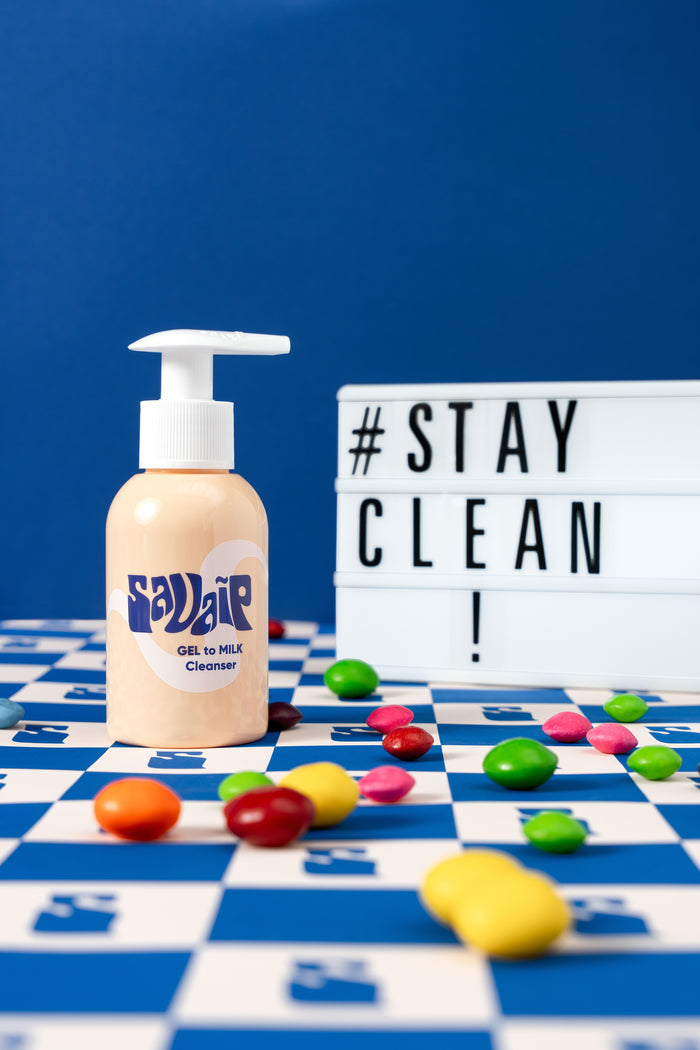
SAVAIP® Gel-to-Milk Cleanser was developed for sensitive, barrier-conscious skin to remove sunscreen, excess oil, and daily impurities while helping skin feel comfortable; not stripped.
→ Explore the Gel-to-Milk Cleanser
2. Add Lightweight Hydration

Many people avoid hydrating products because they're worried about making oily skin look even shinier.
Ironically, dehydrated skin often needs more water not stronger drying ingredients.
Lightweight hydration can improve:
• comfort
• flexibility
• softness
• overall skin balance
Ingredients such as:
• glycerin
• panthenol
• hyaluronic acid
• oat extract
help replenish water while remaining comfortable on oily
Lightweight Hydration That Doesn't Feel Heavy
Hydration should leave your skin feeling refreshed not greasy.
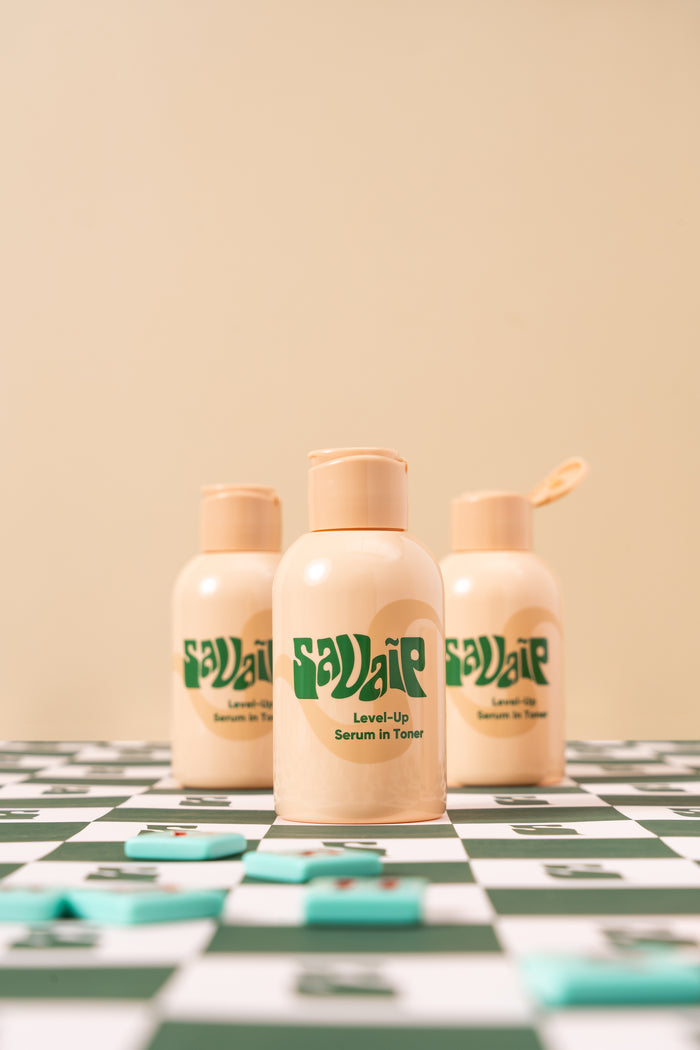
SAVAIP® Plump-Glow Milky Toner delivers lightweight hydration while helping prepare your skin for the rest of your routine.
→ Learn More About Plump-Glow Milky Toner
3. Don’t Skip Moisturizer
Many people with oily skin assume moisturizer is optional.
It isn't.
When skin lacks water, skipping moisturizer can sometimes make dehydration worse by allowing even more moisture to escape.
Instead of looking for the lightest product possible; or avoiding moisturizer altogether; look for formulas that help support your skin barrier while feeling comfortable on your skin.
The goal isn't to make your skin feel heavy.
It's to help it stay hydrated for longer.
Hydration That Feels Comfortable
When your skin feels greasy yet still uncomfortable, the right moisturizer should help lock in hydration without leaving a heavy or greasy finish.
SAVAIP® Water-Lock Gel Cream was created to provide lasting hydration while supporting your skin barrier with a lightweight, breathable texture that's comfortable for combination, oily, and sensitive skin.
→ Discover Water-Lock Gel Cream
If you're unsure which moisturizer suits your skin best, read:
→ How to Choose the Right Moisturizer for Your Skin Type (Without Guessing)
4. Reduce Over-Exfoliation
Exfoliation can leave skin looking brighter and feeling smoother.
But healthy skin isn't built by exfoliating as often as possible.
If your routine already includes:
• multiple exfoliating acids
• facial scrubs
• retinoids
• drying acne treatments
your skin may benefit from something surprisingly simple:
Doing less.
Giving your skin a few weeks of consistent, gentle care often produces better long-term results than continually adding stronger treatments.
Recovery is rarely about finding another active ingredient.
It's about creating the conditions that allow your skin to repair itself.
5. Support Your Skin Barrier
Every healthy skin barrier relies on a combination of water, lipids, and structural proteins working together.
Barrier-supportive ingredients don't "fix" your skin overnight.
Instead, they help create an environment where your skin can recover more comfortably over time.
Some of the most well-researched ingredients include:
• Ceramides
• Oat extract
• Panthenol
• Glycerin
• Squalane
Remember
Healthy skin isn't built by using the strongest products.
It's built by giving your skin consistent support through gentle cleansing, hydration, moisturization,and patience.
Curious About Barrier-Supportive Ingredients?
Discover why ceramides, panthenol, glycerin, and other skin-loving ingredients play such an important role in helping sensitive skin feel stronger and more comfortable.
→ Read: Barrier Boosters: Ingredients That Hug Your Skin
A Simple Routine for Oily Dehydrated Skin
You don't need a complicated skincare routine to help dehydrated skin feel better.
More often, consistency matters more than the number of products you use.
Morning
1. Gentle cleanser
2. Lightweight hydrating toner
3. Barrier-supportive moisturizer
4. Broad-spectrum SPF
Evening
1. Gentle cleanser
2. Hydrating toner
3. Barrier-supportive moisturizer
Build a Routine That Supports Balance
When your skin feels oily and dehydrated at the same time, adding more products rarely solves the problem.
A gentle routine built around cleansing, hydration, and barrier support often gives your skin exactly what it needs.
A simple barrier-focused routine may include


